

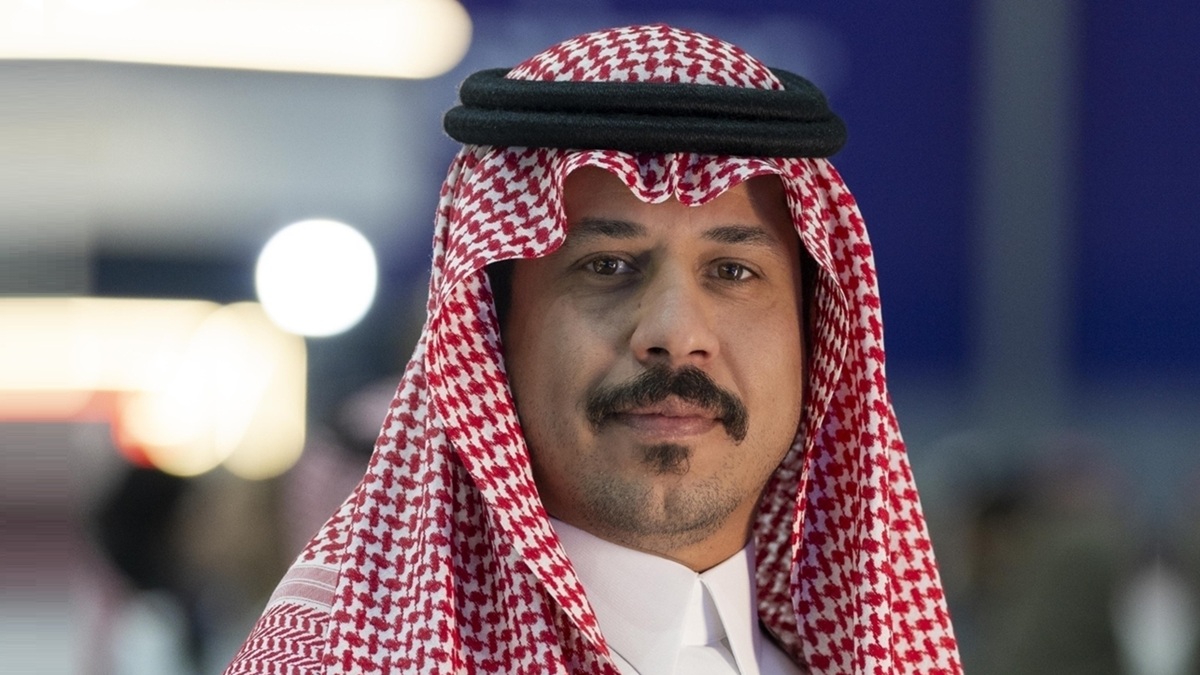
Sultan Alanazi, Country Regional Director, Saudi Arabia, Exabeam | LogRhythm, explores how identity intelligence and behavioral analytics can help energy operators manage emerging risks from human, machine, and AI identities while strengthening the resilience of critical infrastructure.
The greatest cyber risks to Saudi Arabia’s energy sector may not look like attacks at first. As digitalization accelerates across the region, more human, machine, and AI identities are gaining access to critical infrastructure. AI agents add a new dimension to this challenge. They can operate with greater autonomy, interacting with systems and taking actions through legitimate access. This creates more opportunities for risky activity to blend into everyday operations.
Insider risk developments within the energy sector are unfolding against an already complex cyberthreat landscape. In 2025, Saudi Arabia’s National Cybersecurity Authority (NCA) detected and responded to more than 2,000 cyber incidents and issued more than 12,000 cyber alerts and proactive reports. The NCA has also warned that cyberattacks against the electricity sector are growing in number and severity, whilst threat actors are increasing in both number and capability.
Recent conflict and geopolitical uncertainty across the Middle East add another dimension to this risk. At a time of heightened threat, security teams must defend critical infrastructure from external cyberattacks while also identifying risks that emerge from within trusted environments. Against this backdrop, understanding behavior becomes critical to identifying emerging risk before it develops into operational disruption.
Saudi Energy’s Expanding Identity Attack Surface
Saudi Arabia’s energy operators no longer have a simple identity perimeter. Employees, contractors, connected devices, and AI agents increasingly interact across IT and OT environments. With this comes a much broader attack surface.
Human identities remain central to this risk, but the identity landscape around them is expanding. Non-human identities such as applications, devices, and service accounts already operate across industrial environments. AI agents are adding another identity to this environment. For energy security teams, the challenge is understanding when activity from any of these trusted identities begins to represent risk.
Three types of identity illustrate this expanding attack surface:
- Human Identities: Engineers, administrators, operators, and third-party suppliers may require access to critical energy networks. Risk can emerge through malicious actions, accidental or negligent behavior, or compromised credentials. In each case, activity may take place through a legitimate identity, making potentially harmful behavior harder to distinguish from routine operations.
- Non-Human Identities: Connected devices, applications, APIs, and service accounts authenticate and communicate across increasingly interconnected energy environments. These identities can operate continuously and at scale. If compromised, they could provide persistent access to critical systems or processes without immediately attracting attention.
- AI Agents: Autonomous AI agents introduce a different dimension of risk. Unlike traditional automation that generally follows predefined instructions, AI agents can be given an objective and greater discretion over how to achieve it. They may select tools, interact with multiple environments, and adapt their actions as they work towards that objective.
Across all three, valid identity and authorized access do not necessarily mean safe activity. The challenge is therefore not only controlling access but understanding how that access is used and what it might look like before AI agents are deployed.
Identity Security to Behavioral Intelligence
To distinguish normal operations from emerging risk, Saudi energy operators need to trace activity to the identity behind it and assess it in context.
Behavioral intelligence can connect actions across identity, application, and infrastructure systems, helping security teams understand who or what acted, under which authority, and with what potential effect on critical operations. This provides a behavior-driven security operations model that detects insider risk across humans and agents, accelerating threat detection, investigation, and response.
As the energy sector continues to explore AI agent use cases, putting this approach into practice requires certain controls:
- Establish Clear Attribution: Every AI agent operating across Saudi energy environments should be identifiable, including the task it has been given, the permissions it uses, and who or what it is acting on behalf of. If an agent delegates work to another, that chain of authority must remain visible.
- Connect Telemetry Across Environments: Bringing together an agent’s actions, tool use, and outcomes gives security teams a clearer view of activity across IT and OT systems, rather than treating each event as an isolated alert.
- Build Task-Specific Baselines: Saudi energy operators need to establish what normal activity looks like for each agent based on its intended purpose. Tool use outside its assigned task, access to an unfamiliar operational system, or activity that continues after a task should have ended may signal emerging risk.
- Define Intervention Points: Clear thresholds should determine when activity warrants investigation, requires human approval, or triggers constraints on an agent’s actions, taking account of the potential impact on energy production and operational continuity.
These controls need to be established before an agent is deployed and reviewed as its role evolves. The team deploying it should remain accountable for its purpose and operation, with security involved in assessing permissions, monitoring activity, and testing whether controls remain effective.
For Saudi energy operators, the result is earlier intervention when AI activity could put energy production or operational continuity at risk.
Securing the Energy Systems for Future Resilience
Recent conflict across the Middle East has reinforced just how critical the resilience of energy infrastructure is. At the same time, Saudi Vision 2030 is accelerating the Kingdom towards a more diversified, connected, and technology-driven energy sector.
AI will be part of that future. The opportunity for Saudi energy operators is to ensure security advances with it, combining innovation with the visibility, accountability, and behavioral intelligence needed to keep critical operations resilient. The more intelligent energy becomes, the more intelligently it must be secured.